Home Loan (Ghar Karja) Guide in Nepal: Interest Rates, Fees, and Eligibility
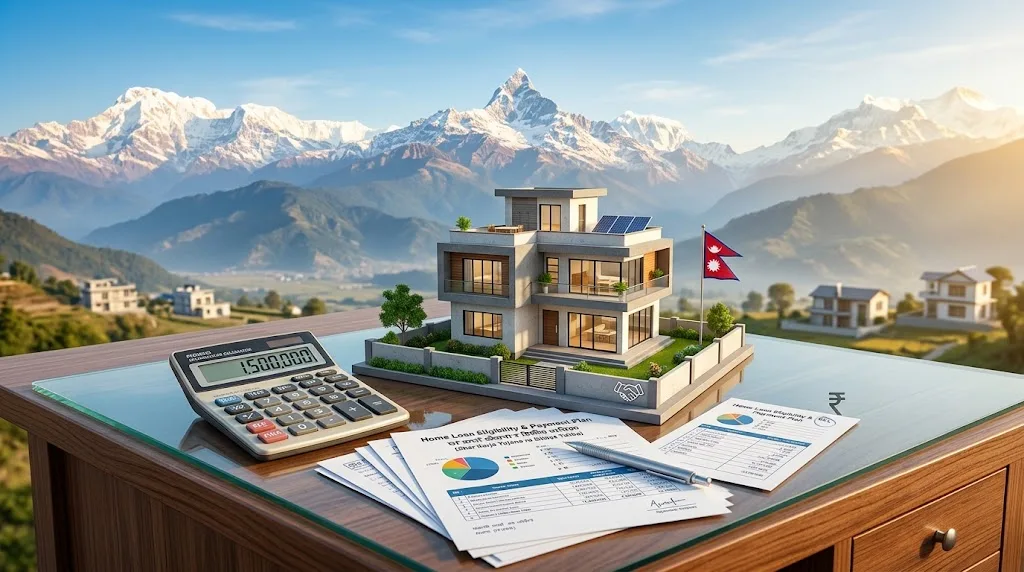
Securing a housing loan (Ghar Karja) from commercial banks ("Class A" financial institutions) in Nepal is one of the most common ways to finance property purchases, construction, or renovation.
Navigating interest rate structures, central bank regulations, and approval criteria can save you money over the course of your loan term. This guide explains how home loans work in Nepal, central bank limits, interest rate calculations, and eligibility requirements.
Here is link for easy calculation of EMI for loan.
1. Key Regulations by Nepal Rastra Bank (NRB)
Home loans in Nepal operate strictly under directives issued by Nepal Rastra Bank (NRB). Here are the core limits every borrower must know:
Loan-to-Value (LTV) Ratio
The LTV ratio defines the maximum percentage of property market value (or fair market value assessed by an approved engineer) that a bank can lend:
- Residential Home Loans (up to NPR 2 Crore): Maximum 70% LTV for first-time home buyers under residential provisions.
- General Real Estate / Commercial / Non-First-Time Loans: Maximum 50% LTV within Kathmandu Valley, and up to 60% LTV outside the valley.
Debt-Service Coverage Ratio (DSCR)
Banks evaluate your monthly income against your monthly Equated Monthly Installment (EMI). Generally, your total EMI payments cannot exceed 50% to 60% of your verified net disposable monthly income.
2. How Interest Rates Are Calculated in Nepal
Interest rates on housing loans in Nepal are structured around the Base Rate:
Interest Rate = Bank Base Rate + Premium Rate
- Base Rate: The minimum rate below which a bank cannot lend, determined quarterly based on the bank's cost of funds.
- Premium Rate: A fixed percentage (usually ranging between 1.5% and 4.5%) added by the bank based on your credit profile and loan duration.
- Fixed vs. Floating Rates: NRB mandates that banks offer fixed interest rates for personal housing loans (especially for tenure exceeding 5 years) to protect borrowers from market fluctuations, alongside standard floating rate options.
3. Eligibility Criteria
To qualify for a housing loan in Nepal, applicants must meet the following standard requirements:
- Age: Minimum 21 years at the time of application, and maximum 65–70 years by loan maturity.
- Income Source:
- Salaried Individuals: Minimum continuous employment of 1 to 2 years with official salary tax clearance (TDS receipt).
- Self-Employed / Business Owners: Registered business running for at least 2–3 years with audited financial statements and tax clearance receipts.
- Foreign Remittance Recipients: Verified regular inward remittance through official banking channels.
- Property Ownership: Clear title deed (Lalpurja) with official road access recorded in survey maps (Napi).
4. Required Documentation Checklist
Preparing your document file in advance speeds up loan processing significantly:
Personal & Income Documents
- Passport-size photographs and copies of Citizenship Certificates (Nagarikta) of applicant and guarantor.
- Family Relationship Certificate (Nata certified by Ward Office).
- Tax clearance certificate (Kharokot/Tax Receipt) or salary tax deduction certificate.
- Bank account statements for the past 6 to 12 months.
Property & Legal Documents
- Land Ownership Certificate (Lalpurja).
- Land tax clearance receipt (Malpot Tirpt Tirpa) from the local Ward Office for the current fiscal year.
- Blue Print Map (Napi Naksa) and Trace Map (Kitta Naksa).
- Approved Building Blueprint (Naksa Pass) and Construction Permit (Pramankrit Letter) if building a house.
- Prior Sale/Purchase agreement if buying land or built property.
5. Associated Processing Fees & Charges
When budgeting for a home loan, factor in these upfront costs:
- Loan Processing Fee: Typically 0.25% to $0.75% of the total loan amount (capped by NRB guidelines).
- Property Valuation Fee: Payable to the bank’s certified engineer for property appraisal.
- Mortgage Deed Registration Charges: Registration fees payable at the Land Revenue Office (Malpot) for pledging the title deed (Rokka).
- Property Insurance: Annual fire and earthquake insurance premium for built houses.
Here is link for easy calculation of EMI for loan.
Key Takeaway
Compare base rates across multiple commercial banks in Nepal before locking in your application. Negotiate the premium rate upfront and ensure your property has clear road access and verified municipal documentation for smooth approval.